25 Feb Plantation Shutters vs. Solar Shades: What Miami Homeowners Are Choosing
Plantation Shutters vs. Solar Shades: What Miami Homeowners Are Choosing
When it comes to window treatments in South Florida, two options consistently top homeowners’ wish lists: plantation shutters and solar shades. Both offer distinct advantages for Miami’s unique climate, but which one is right for your home?
After installing hundreds of window treatments across Miami-Dade, Broward, and Palm Beach Counties, we’ve noticed clear patterns in what homeowners choose—and why. Here’s what you need to know to make the best decision for your space.
Understanding the Basics
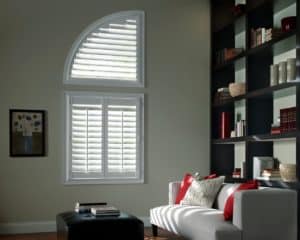
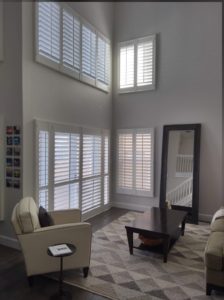
Plantation Shutters are solid window coverings with adjustable louvers (slats) that tilt to control light and airflow. They’re mounted directly to your window frame and become a permanent architectural feature of your home.
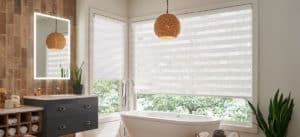
Solar Shades are fabric roller shades designed to filter UV rays and reduce heat while maintaining your view to the outside. They roll up and down smoothly and come in various openness factors (how much you can see through them).
The Miami Climate Factor
Living in South Florida means dealing with intense sun, high humidity, salt air (for coastal properties), and hurricane season. Your window treatments need to handle all of this while keeping your home comfortable and your energy bills manageable.
How Plantation Shutters Perform in Miami
Heat Control: The solid construction and adjustable louvers give you precise control over sunlight and heat. Tilt the louvers to deflect direct sun while maintaining airflow.
Humidity Resistance: This is crucial. Real wood shutters can warp in Florida’s humidity, which is why we typically recommend faux wood or composite materials for South Florida homes. These materials resist moisture, won’t crack or fade, and look identical to real wood.
Longevity: With proper materials, plantation shutters last 20-30 years in Miami’s climate. We’ve seen shutters we installed in Coral Gables homes in the 1990s still functioning perfectly today.
How Solar Shades Perform in Miami
Heat Control: This is where solar shades excel. They’re specifically engineered to block up to 95% of UV rays and significantly reduce heat gain—critical for west-facing windows in Brickell high-rises or Pinecrest homes with large glass expanses.
Energy Savings: Miami homeowners report 15-25% reductions in cooling costs after installing solar shades on their sunniest windows. For a typical home, that’s $300-600 in annual savings.
View Preservation: Unlike shutters that block your view when closed, solar shades maintain visibility. This makes them ideal for Aventura condos and Sunny Isles Beach apartments with stunning bay or ocean views.
Longevity: Quality solar shades last 7-12 years in Miami before fabric degradation from intense UV exposure requires replacement.
Comparing the Key Factors
Light Control
Winner: Plantation Shutters
Shutters offer the most versatile light control. You can:
- Fully close for complete darkness (great for bedrooms)
- Tilt louvers to redirect light up toward the ceiling
- Open fully for maximum natural light
- Adjust throughout the day as the sun moves
Solar shades provide consistent filtering but lack the same flexibility. You’re either up (full light) or down (filtered light). Some openness factors let in more light than others, but you can’t adjust on the fly.
Privacy
Winner: Plantation Shutters
When closed, shutters provide complete privacy—essential for homes in close-proximity neighborhoods like Coconut Grove or Miami Beach. Even with louvers tilted, people can’t see clearly into your home.
Solar shades offer privacy from the outside during daylight (people can’t see in when it’s brighter outside than inside), but at night with interior lights on, they become somewhat transparent. Many Miami homeowners pair solar shades with blackout roller shades or drapery for nighttime privacy.
Energy Efficiency
Winner: Solar Shades (slight edge)
Both options reduce energy costs, but in different ways:
Solar shades specifically block heat at the glass, preventing it from entering your home. They’re particularly effective on south and west-facing windows. A Doral homeowner recently reported her living room temperature dropped 8°F after installing 5% openness solar shades on her western windows.
Plantation shutters create an insulating air pocket between the shutter and glass, reducing heat transfer in both directions. They’re excellent for year-round efficiency but may not be quite as effective at peak sun hours as solar shades.
For maximum efficiency, some of our Pinecrest clients install both: solar shades for daytime heat blocking and shutters for nighttime insulation and aesthetics.
Aesthetics and Home Value
Winner: Plantation Shutters
This is where shutters truly shine. They’re considered a premium architectural feature that adds lasting value to your home. Real estate agents in Coral Gables and Miami Beach consistently tell us that quality plantation shutters are a strong selling point—especially for Mediterranean Revival and historic homes.
Solar shades offer a clean, contemporary look that works beautifully in modern Brickell condos and minimalist spaces, but they’re viewed as a soft furnishing rather than an architectural upgrade.
Maintenance
Winner: Solar Shades
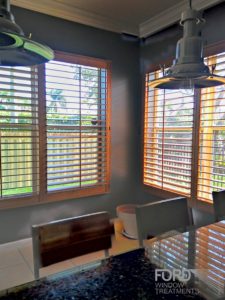
Solar shades require minimal maintenance—occasional dusting or vacuuming. The fabric is treated to resist dust and dirt buildup.
Plantation shutters need regular dusting of each louver, though the solid construction means no fabric to worry about. A quick wipe-down every few weeks keeps them looking new. For coastal properties, quarterly cleaning removes salt residue.
Installation and Adjustability
Winner: Solar Shades
Solar shades install quickly (usually in under an hour) and can be motorized for effortless operation—a game-changer for hard-to-reach windows or if you have many windows to manage. We’re seeing motorization in about 60% of new solar shade installations in Miami high-rises.
Plantation shutters require professional measurement and installation, with a 3-6 week lead time for custom fabrication. However, once installed, they become a permanent, zero-maintenance fixture. The manual operation is intuitive, though motorization is available for larger shutters.
Cost Comparison
Winner: Depends on Your Window Size
Here’s where it gets interesting:
Solar Shades:
- Standard window (36″ x 60″): $150-400
- Large window (72″ x 96″): $400-700
- With motorization add: $200-400 per window
Plantation Shutters:
- Standard window: $400-700
- Large window: $800-1,400
- Specialty shapes: $1,000-2,500+
The initial investment for shutters is higher, but when you factor in their 20-30 year lifespan versus 7-12 years for solar shades, the lifetime cost difference narrows considerably.
What Miami Homeowners Are Actually Choosing
Based on our installation data from the past 18 months:
Plantation Shutters are chosen for:
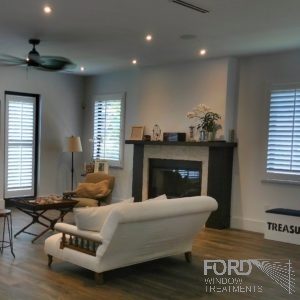
- Primary living areas (living rooms, family rooms)
- Bedrooms where blackout capabilities matter
- Street-facing windows needing maximum privacy
- Historic homes in Coral Gables and Coconut Grove
- Properties being prepared for sale
- Anywhere aesthetics are the top priority
Solar Shades are chosen for:
- Large expanses of glass (especially floor-to-ceiling windows)
- West and south-facing windows with intense heat
- Rooms with views you want to preserve (Biscayne Bay, ocean, golf courses)
- Modern condos in Brickell, Edgewater, and downtown Miami
- Home offices where glare reduction is critical
- Budget-conscious projects with many windows
The Hybrid Solution: Why Not Both?
About 30% of our Miami clients choose a combination approach:
Popular combinations:
- Solar shades in living areas + plantation shutters in bedrooms
- Solar shades on west-facing windows + shutters on all others
- Solar shades for heat/glare control + drapery panels for aesthetics and nighttime privacy
A recent project in a Sunny Isles Beach condo featured solar shades on the floor-to-ceiling glass overlooking the ocean (preserving the million-dollar view while blocking heat) and plantation shutters in the bedrooms (for complete darkness and privacy).
Making Your Decision: Key Questions to Ask
Choose Plantation Shutters if:
- Your primary concern is complete light-blocking capability
- You want a permanent architectural upgrade that adds home value
- You prefer a traditional or transitional aesthetic
- You have standard-sized windows where the cost difference isn’t prohibitive
- Privacy is your top concern
- You’re staying in your home long-term (to maximize ROI)
Choose Solar Shades if:
- Heat control is your biggest problem (especially west-facing exposure)
- You want to preserve outdoor views
- You have large windows where shutter costs become prohibitive
- You prefer contemporary, minimalist design
- You want easy motorization options
- You’re in a rental or condo with restrictions on permanent fixtures
Choose Both if:
- You have a larger budget and want optimal performance
- Different rooms have different priorities
- You want maximum flexibility in function and aesthetics
South Florida-Specific Considerations
Coastal Properties (Miami Beach, Key Biscayne, Sunny Isles):
If you’re near the ocean, go with faux wood or composite shutters, never real wood. For solar shades, upgrade to marine-grade fabrics that resist salt air degradation.
High-Rise Condos (Brickell, Edgewater):
Check your building’s HOA requirements for exterior appearance. Most allow both shutters and solar shades, but some require specific colors for external visibility. Solar shades with motorization are increasingly popular in high-rises due to convenience.
Historic Homes (Coral Gables, Coconut Grove):
Plantation shutters often align better with historic preservation guidelines and neighborhood character. Some areas have architectural review boards that may have preferences.
Hurricane Zones:
Neither option provides hurricane protection. Pair your choice with impact windows, accordion shutters, or storm panels as required. Always remove or roll up solar shades before a storm.
The Bottom Line
There’s no universal “best” choice—it depends on your specific needs, budget, and priorities.
Plantation shutters offer timeless elegance, maximum light control, and long-term value. They’re an investment in your home’s architectural character.
Solar shades provide superior heat blocking, view preservation, and modern functionality at a lower initial cost point. They’re practical problem-solvers for Miami’s intense sun.
At Ford Window Treatments, we’ve been helping Miami homeowners make this decision since 1949. We take the time to understand your lifestyle, budget, and home’s unique characteristics before making recommendations. Sometimes the answer is one or the other—sometimes it’s both.
Ready to Decide?
The best way to make the right choice is to see samples in your actual space. Light levels, room function, existing decor, and your home’s orientation all play a role in which option will work best.
Schedule your free in-home consultation, and we’ll bring samples of both plantation shutters and solar shades to your Miami-area home. We’ll measure your windows, discuss your priorities, and provide detailed quotes with no obligation. With 75 years of experience in South Florida, we’ll help you choose what’s best for your home.
Call us at 305-945-5516 or schedule an appointment to visit our North Miami showroom at 14270 N.E. 18th Avenue.
With more than 75 years of experience, Ford Window Treatments continues to deliver custom window treatment solutions that balance design, functionality, and craftsmanship for residential and commercial clients throughout South Florida.
For more information about Ford Window Treatments or to schedule a design consultation, visit www.fordwindowtreatments.com.
Contact
Barbara Kramer – Owner of Ford Window Treatments
305-945-5516
Sorry, the comment form is closed at this time.